VRHD Portfolio Methodology
Summary
VRHD is a proprietary portfolio of 23 complementary algorithms, executed entirely automatically across major forex pairs, gold, and major stock indexes — providing diversification across three distinct asset classes.
All trades are opened and closed between 00:00 and 21:00 London time, covering Asian, European, and New York sessions. There are no overnight positions, meaning no overnight risk or holding costs.
Risk Management
Every trade has exactly the same risk exposure. Risk is set at approximately 0.4% of account balance per trade. The stop-loss for each position is set such that 0.4% is the maximum downside risk on each individual trade.
This approach ensures that risk is strictly controlled and consistent across all trades, regardless of market conditions or instrument volatility.
Maximum Portfolio Drawdown
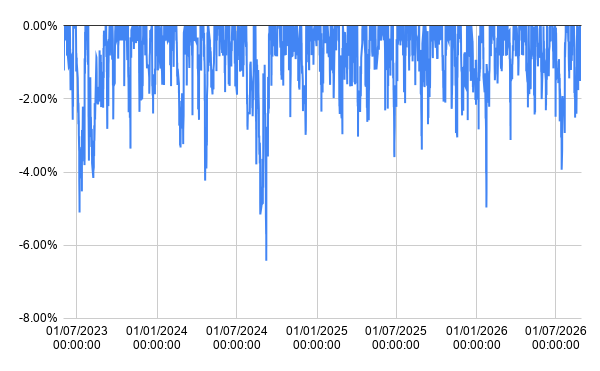
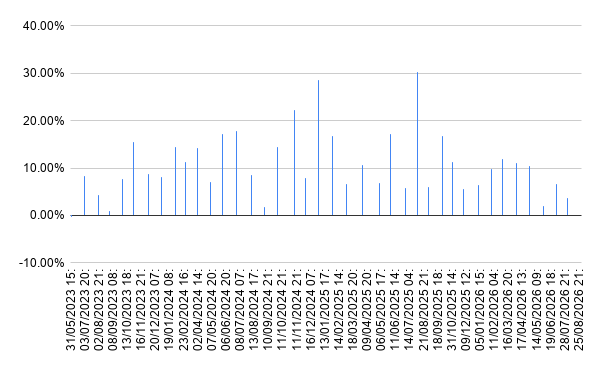
The risk per trade is calibrated such that the portfolio's maximum drawdown is clearly understood from the significant backtest sample. This provides a clear, data-driven understanding of the likely maximum drawdown from peak going forward.
In addition to drawdown depth, the maximum drawdown period (duration) is calculated. Any drawdown exceeding the backtested maximum duration triggers a review, indicating that re-optimisation of the portfolio may be required.
Portfolio Structure
VRHD consists of 23 distinct algorithms, executed entirely automatically. These algorithms are carefully balanced across multiple instruments, trading principles, and methods. No two algorithms are identical; each market is regarded uniquely, providing broad diversification via methodology.
Backtest Analysis
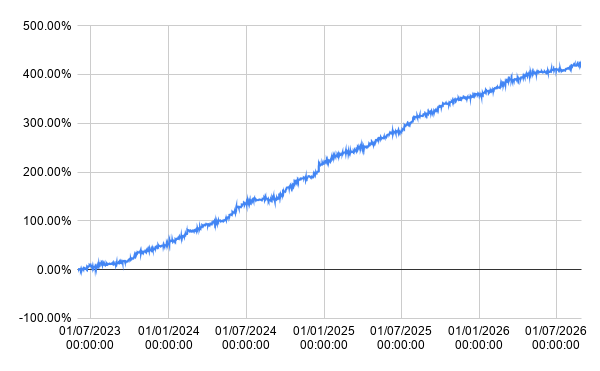
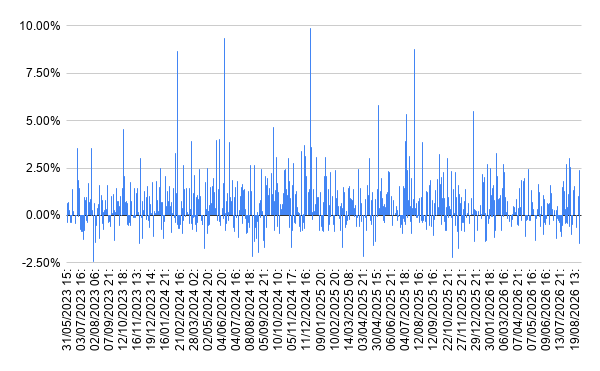
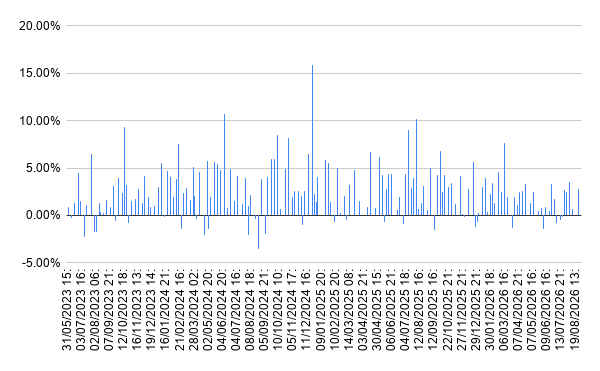
The following charts illustrate the theoretical performance and drawdown characteristics of the VRHD portfolio during the backtest period.
Smart Execution Features
A sophisticated trade management system has been developed to optimise execution and reduce costs. Key features include:
- Splitting: Orders are automatically broken down into smaller lot sizes to reduce cost and slippage.
- News Pausing: The system automatically pauses positions through significant news events such as Non-Farm Payroll.
- Hedging & Netting: The system maintains an internal ledger of current deals. Live positions are netted automatically, reducing spread and transaction costs.
The system is designed to trade through the vast majority of news events without risk of slippage. Some extremely volatile news events are avoided for enhanced risk mitigation.
Algorithm Monitoring & Redundancy
A dedicated monitoring system clearly indicates when a strategy has drawn down more than its tested maximum. This allows for:
- Re-optimisation of the underperforming algorithm
- Suspension of the strategy when required
- Proactive risk management before it impacts the overall portfolio
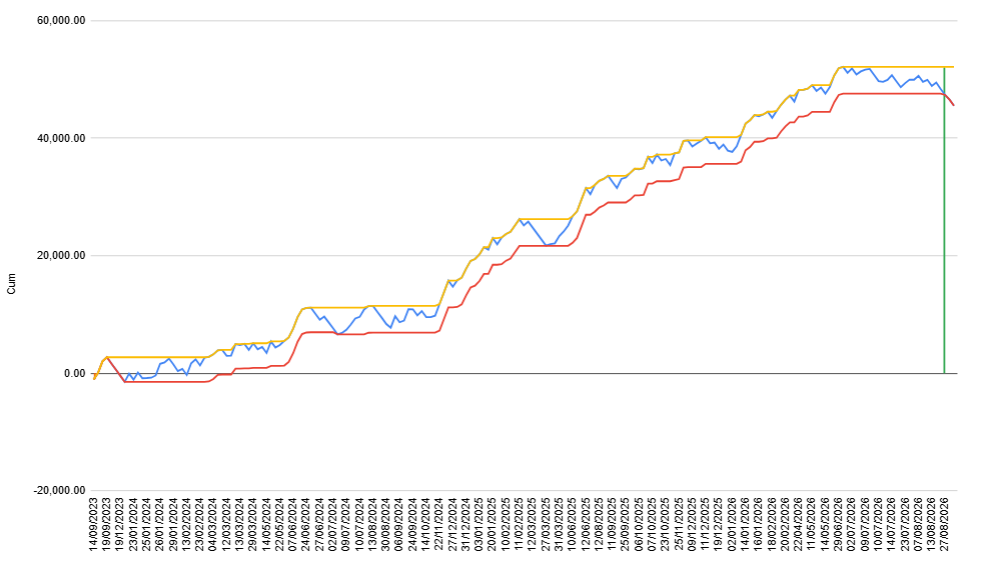
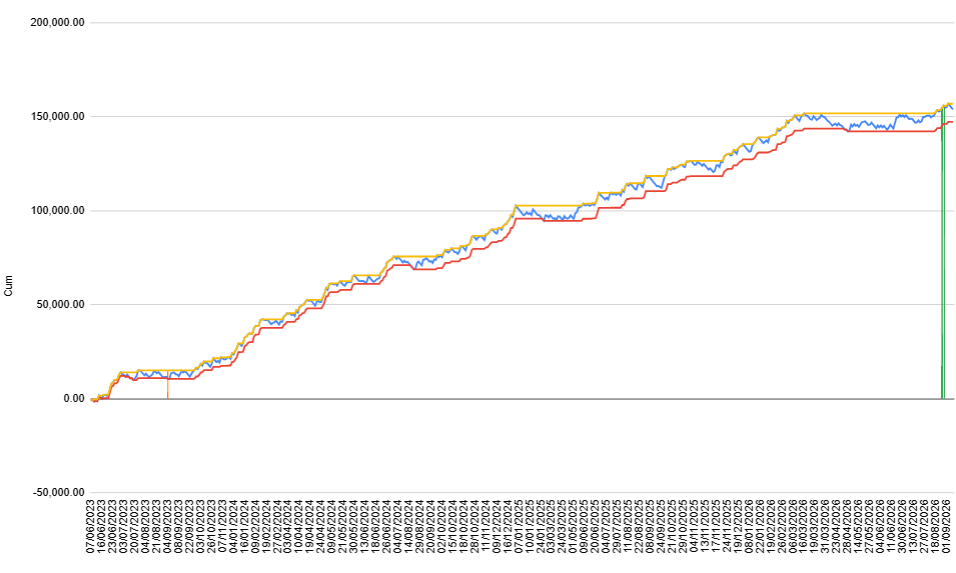
Example: An individual algorithm that might be starting to underperform (red line represents prior maximum drawdown from peak).
Development Process
The trading strategies and risk management framework that underpin VRHD are the original design and intellectual property of Guy Baker. The core concepts — including the 0.4% per-trade risk rule, the Calmar optimisation approach, and the redundancy monitoring system — were conceived, tested, and refined by the portfolio manager.
To accelerate development and enhance efficiency, AI tools were used extensively in the coding, testing, and optimisation phases. This allowed for rapid prototyping, backtesting, and refinement of the algorithms while maintaining full human oversight.
All algorithms are subject to ongoing review, monitoring, and manual re‑optimisation as required. AI is used as a development accelerator, not as a decision‑maker in live trading.
Hedged Return
The portfolio is structured so that each new algorithm added increases the overall Calmar ratio of the entire portfolio. Each strategy adds return without increasing — and typically decreasing — overall portfolio drawdown risk. This creates a positive compounding effect on risk-adjusted returns.
Backtesting & Optimisation
Each strategy is developed and validated using 3 years of 5-minute tick data. This extensive backtest sample provides a robust foundation for understanding strategy behaviour across various market regimes.
Each strategy is optimised to produce the maximum Calmar ratio — the highest return relative to maximum drawdown over the backtest period. This ensures that each component contributes positively to the portfolio's risk-adjusted performance.
Correlation & Diversification
Each strategy and the portfolio as a whole has a low correlation to the underlying instruments and major indexes.
Portfolio diversification is achieved using three principles:
- Multiple instruments
- Multiple instrument classes (forex, commodities, indices)
- Multiple trading methods (trend, range, mean reversion)
Account Types
Bespoke proprietary execution technology enables trading on multiple accounts simultaneously:
- Personal funds: Traded using a Pepperstone spread betting account, offering significant tax advantage for British citizens.
- Darwinex VRHD: All positions are traded concurrently, with the portfolio manager invested alongside Darwinex participants in every trade — ensuring full alignment of interest and complete FCA-regulated transparency.
Guy Baker is not FCA-authorised. Live performance data for VRHD is hosted on Darwinex (FCA-regulated, FRN 586466).
Past performance is not a reliable indicator of future results. The backtested results shown on this page are hypothetical and are not a guarantee of future performance.
Nothing on this page constitutes investment advice.